


In July 2025, the Deaf advocacy and wellbeing organisation DAWN took a significant step towards strengthening mental health awareness within the Deaf community by organising two Mental Health First Aid (MHFA) training sessions.
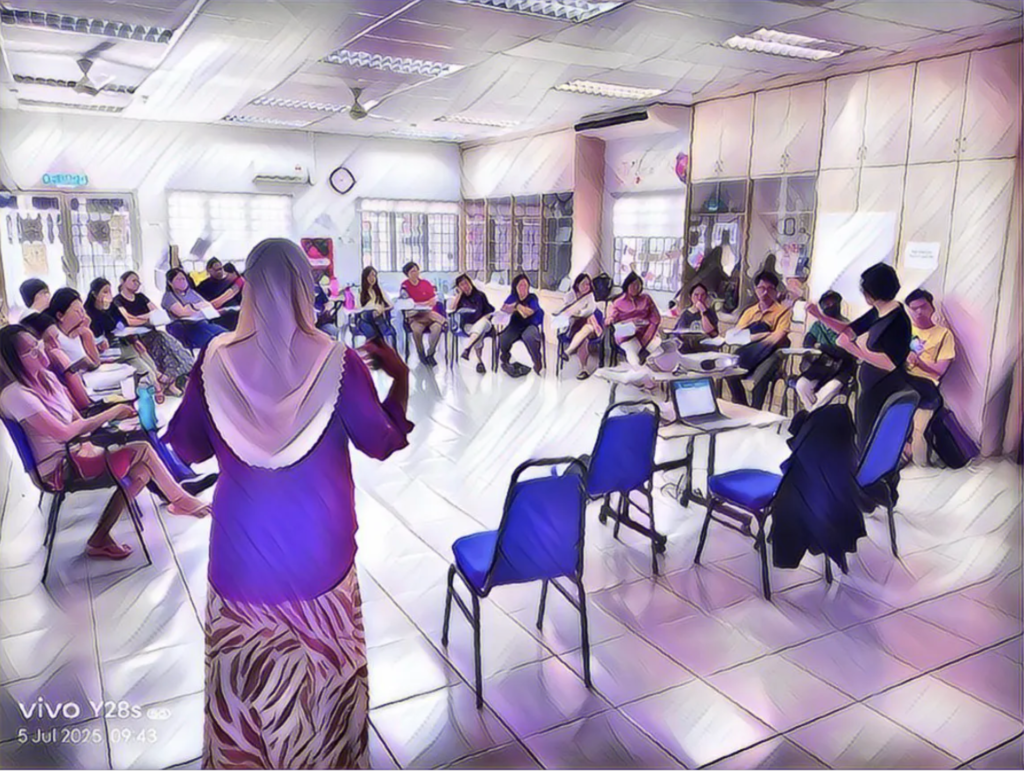
Held on 5–6 July and 19–20 July 2025 at a mental health centre in Petaling Jaya, the trainings brought together 40 Deaf participants from across Malaysia. The programme aimed to equip participants with basic knowledge and practical skills to recognise mental health challenges and provide initial support to peers who may be experiencing emotional distress.
Preparing the Community Before Training
Before the formal training began, DAWN conducted two orientation sessions in early June to ensure participants clearly understood what MHFA training involves. These sessions attracted strong interest, with 68 Deaf individuals attending. The orientations allowed participants to learn about mental health concepts, the commitment required, and the role of a Mental Health First Aider before deciding to enrol. (Read more in the full article.)
Based on community feedback, DAWN adjusted its original plan. While both Standard and Adolescent MHFA courses were initially proposed, strong interest in the Standard MHFA course led to both July sessions being dedicated to this module instead.
Inside the Training Room
Each training session ran over two full days, from 9.00am to 4.00pm, with class sizes capped at 20 participants to ensure effective learning and clear communication. Professional BIM interpreters were present throughout, enabling Deaf participants to fully engage with the content and discussions.
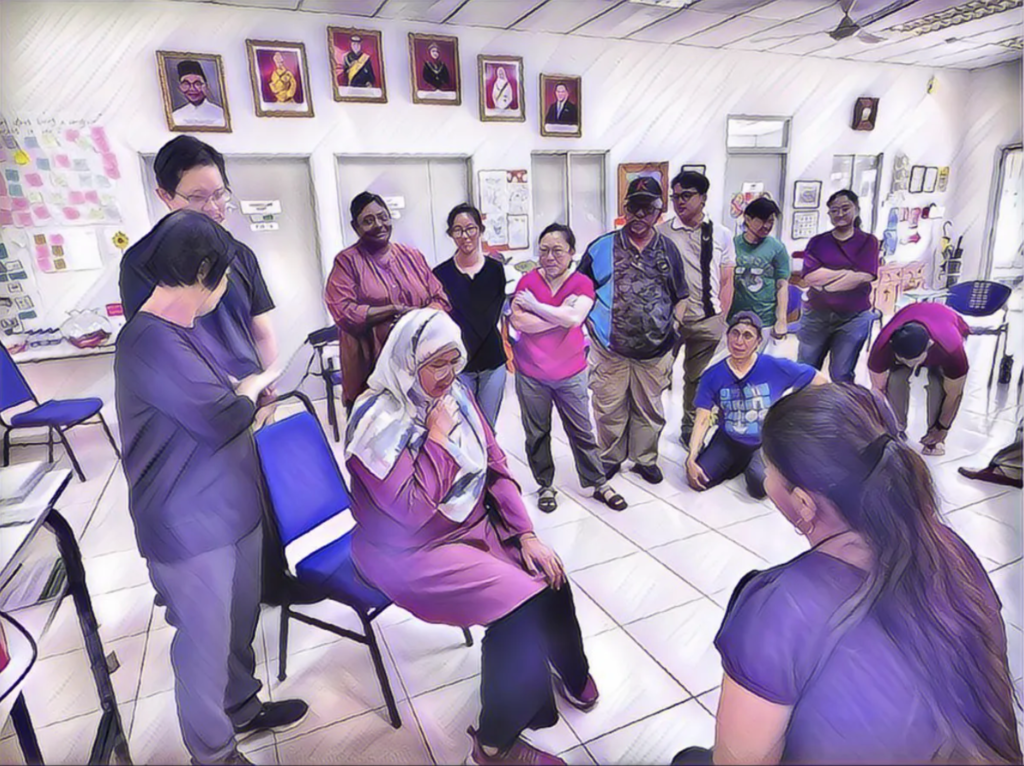
The training was facilitated by Puan Fazlin Alyeope, a certified MHFA instructor with professional counselling experience. Through lectures, group discussions, and mock sessions, participants were introduced to common mental health conditions such as depression, anxiety, and psychosis, as well as crisis situations like panic attacks and suicidal thoughts.
A key highlight of the training was learning the ALGEE action plan—a step-by-step approach that guides individuals on how to respond when someone is experiencing mental health difficulties. Mock sessions helped participants see how ALGEE can be applied in real-life situations, making the learning more practical and relatable.
Challenges and Learning Outcomes
One of the main challenges identified during the training was language. While the sessions were interpreted into BIM, the course materials and assessments were conducted in English. This affected some participants’ ability to demonstrate their understanding during assessments.
Despite this, participation levels remained high. The training emphasised that Mental Health First Aid focuses on listening, offering reassurance, recognising warning signs, and encouraging professional help, rather than diagnosing or providing therapy.
Participants reported increased awareness of mental health issues, clearer understanding of their role in offering initial support, and a strong interest in seeing future trainings delivered with materials in Bahasa Malaysia to improve accessibility and comprehension.
Building a Safer, More Supportive Community
Overall, the MHFA training strengthened mental health awareness within the Deaf community and helped build confidence among participants to support one another in times of emotional distress. The programme highlights the importance of accessible, culturally responsive mental health education and continued collaboration between Deaf organisations and mental health professionals.
With further adaptation and ongoing support, initiatives like this can contribute to safer, more informed, and more resilient Deaf communities in Malaysia.

Credit
This training was part of the Projek Pembangunan Sumber Pertolongan Cemas Kesihatan Mental Bagi Komuniti Pekak di Malaysia, supported by the National Centre of Excellence for Mental Health (NCEMH), Yayasan Hasanah, and the Ministry of Health Malaysia under the Mental Health Grant.
Leave a Reply